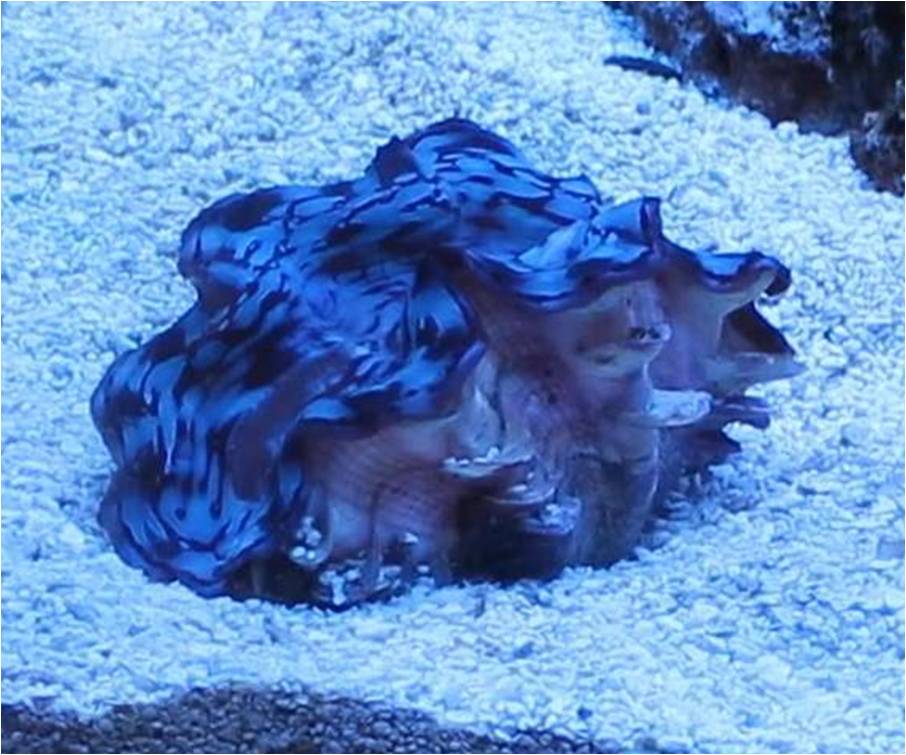
Spot Feeding Marine Clams
There are a lot of different opinions out there about the manual feeding of clams. I have had great success with weekly (or so) feedings until the clam is about 4 inches in size. I only feed monthly from 4 to 5 inches, following the below process. The below process can also be used for the spot feeding of other filter feeders and some corals.
Based on what I have researched, clams become completely photosynthetic around 4 inches in size. Once around 4 to 5 inches in size, they can thrive on great water quality and higher lighting levels, both in addition to the phytoplankton (floating algae cells) that will be found in all mature and healthy set-ups . Any smaller than that, and they will need to some of their nutrition from the water when in a mature aquarium. As my clam is not quite big enough to be able to be considered completely photosynthetic yet (getting everything he needs from the lighting to survive), I will feed him once every week or two.
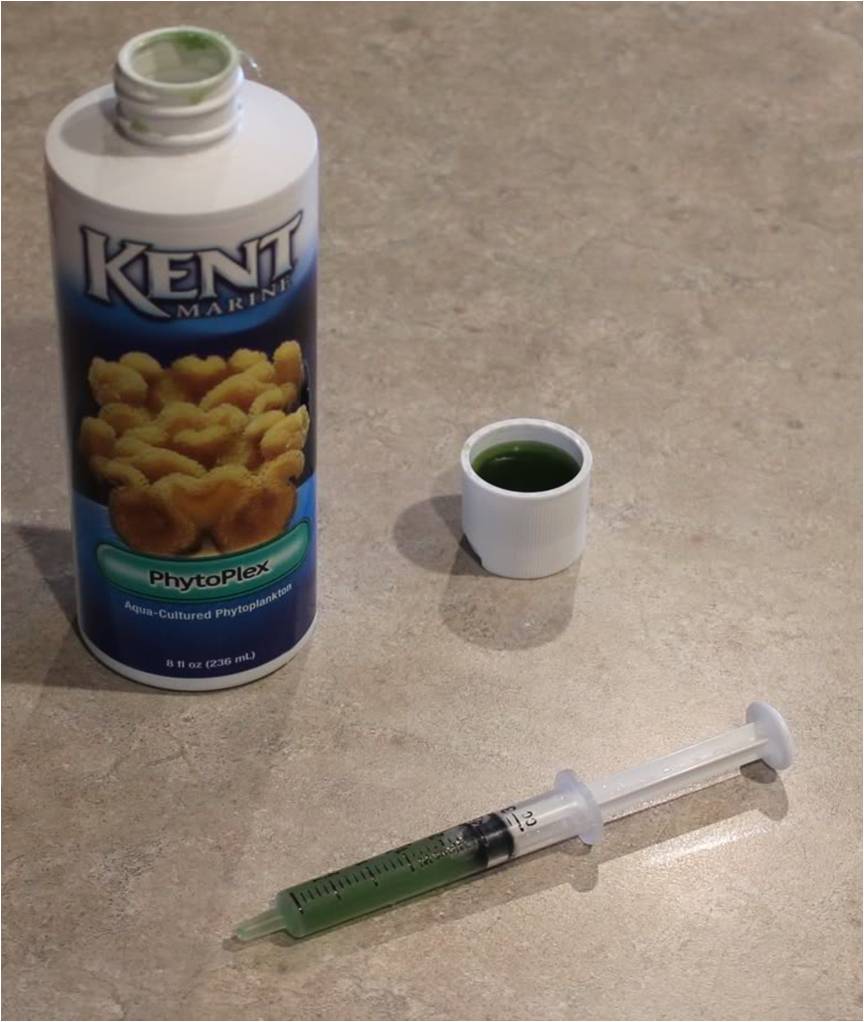
I feed my clam an aqua-cultured phytoplankton that has no visible partials in the solution. I will get a syringe, draw some tank water in it, then a very very small amount of the liquid food. In the below pic you can see the syringe only has about 1/8 to 1/16th (closer to 1/16) of the food in it, and the rest is tank water. When feeding a clam you have to be extremely, extremely careful. It is really easy for their gills to become clogged due to over feeding which is fatal to them. That is why I use such a small amount of food.
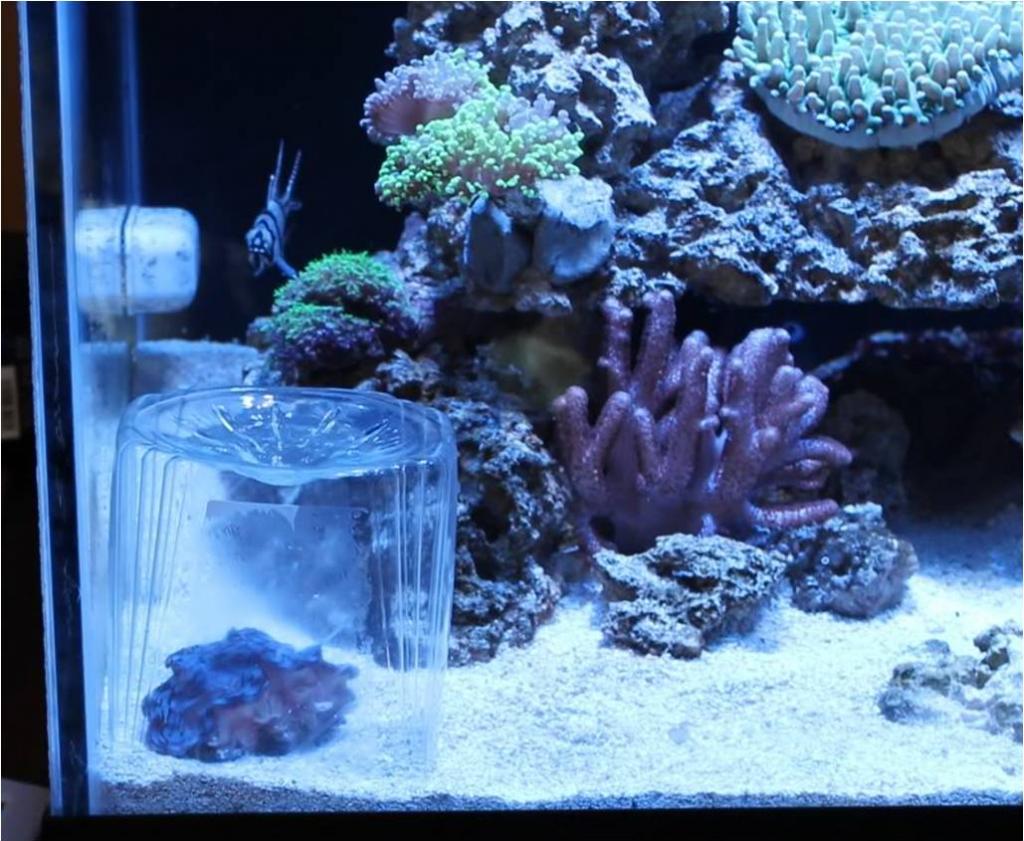
I have made a feeding cover for my clam as well. It’s the bottom ½ of a juice jug with a hole drilled in the bottom (now top). I will turn off my powerheads to temporarily reducing the flow in the tank and place the feeding cover over the clam. After about 15 minutes, I will take the syringe and slowly squirt the food into the container through the hole. After 20 to 30 minutes of the clam taken in the food from the water in the cover, I will remove the cover and turn the powerheads back on.
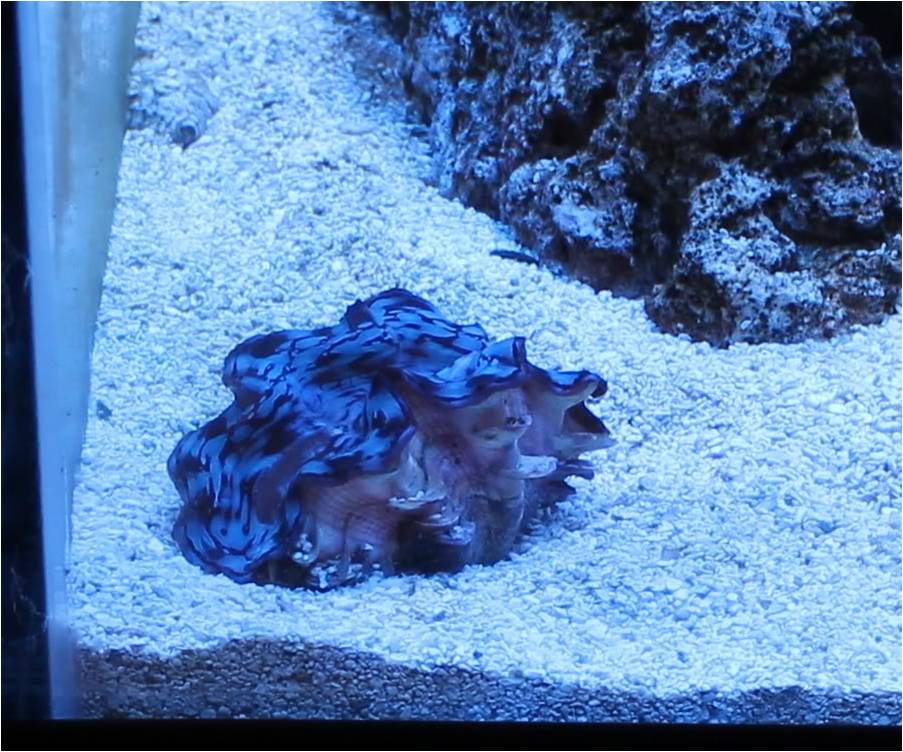
And there he is , two hours after the feeding, happy as a clam
If you have any questions on this topic, it might be best to ask it in our forum (link below). If you are already a member, it only takes seconds to sign-up.
http://www.aquaticcommunity.com/aquariumforum/index.php