The Importance of Water Flow and Movement
In my experience, this is one of the more important factors in setting up a marine aquarium. Having good flow and water movement is key to having a great and healthy marine aquarium. Not having enough flow can lead to a variety of potential problems. I will explain why I have this opinion along with showing a few examples.

The benefits of having good water movement and flow include:
1) Increased oxygen levels through improved water movement at the surface
2) Allow food to be carried to the tank inhabitants and corals
3) Allow wastes to be carried away from the tank inhabitants and corals
4) Help with the photosynthesis and calcification processes of corals
5) Help prevent the build-up of detritus
6) Helps to create a more natural environment for your tank inhabitants.
7) Can help to prevent some types of marine algae from getting a strong foot hold in your aquarium.
Some of the problems you could have if you have too low water movement or too low flow
1) Excessive nitrates and phosphates from allowing detritus to build up and remain in dead spots.
2) Good conditions for pathogenic bacteria to grow (the bacteria that causes infections in fish and corals).
3) Slow growth in corals
4) Ineffective or reduced biological filtration from your live rock
5) Ineffective or reduced filtration from your skimmer (or other forms of filtration you are using).
What’s the Difference in Water Movement and Water Flow ?
Let me first clear up the terminology that I am using:
Water Flow: The most common type of water flow is the laminar flow of water that is moving in one direction almost in a straight line, like a current in the ocean. In addition to laminar flow, you can have turbulent flow which happens when two currents are moving towards each other head-on, or when a current meets a solid object creating some water movement in many different directions at once. Turbulent flow created by using several power heads is better than laminar flow in most marine aquariums. Laminar flow is better suited to recreate environments that are typically found in the ocean at depths of more than 40 feet. Turbulent flow is better suited to recreate environments that are found in the ocean at depths of less than 40 feet. Turbulent flow will also change slightly as it is more random by nature.
Water Movement: This is the back and forth surge like movement in the water that is created when a wave passes over a coral reef. This type of flow is also best to use when creating the typical conditions found at depths in the ocean of less than 40 feet. This is the best type of flow to have in a reef tank as coral reefs will have waves passing over them almost all the time. Most corals do best when they receive turbulent water flow and water movement both.
How Much Flow and Movement do I Need ?
This is one topic that has many, many, many different “rules of thumb”. Factors that you have to take into account are the types of fish and corals that you will be keeping and how you stack your live rock in your aquarium. The total amount of flow is usually summarized by stating how many times per hour the total volume of water in the display tank is moved. For example, if you have 1000 GPH of flow in a 100 gallon tank, you will have 10 times flow, or 10X. Based on everything that I have read and tried in both of my current reef tanks, I would suggest using around 50X flow for a reef tank with SPS, and around 30X flow for non-SPS reef and FOWLR set-ups as your starting point and increasing it from there were you can. I will share two examples of what I have done near the end of this article.
NOTE: You cannot use any rule of thumb if you are keeping any type of fish or coral that require a specific flow rate. Seahorses for example require very low flow and will not survive in a tank with even moderate flow.
What can I use to Create Water Flow and Water Movement?
When it comes to creating laminar and turbulent flow, the most common approach is to use multiple powerheads inside the tank. Other aspects of your set-up will also provide some flow to your tank which can include: return pumps from your sump, hang on back protein skimmers, hang-on back filters, or canister filters just to name 3 possibilities.
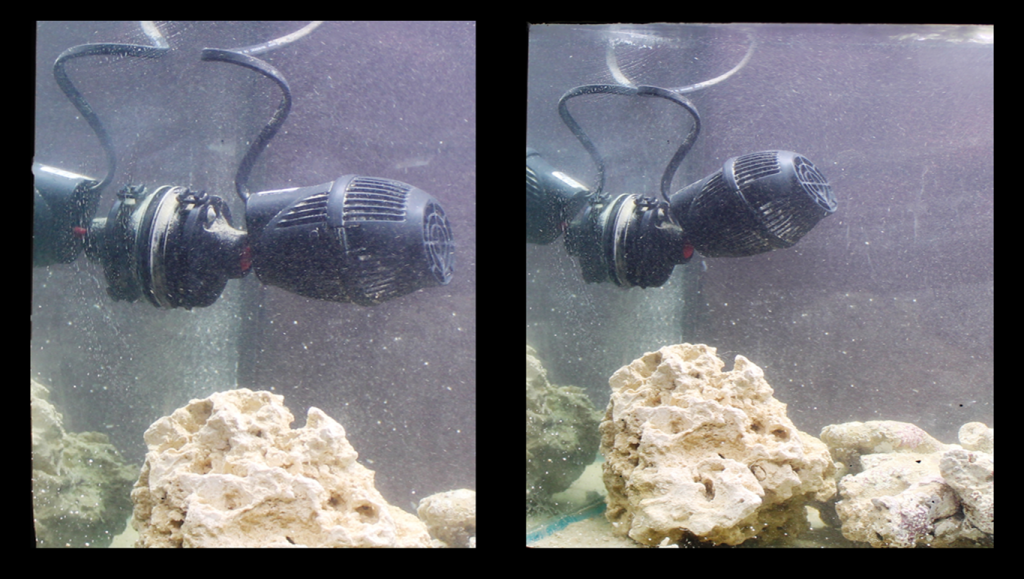
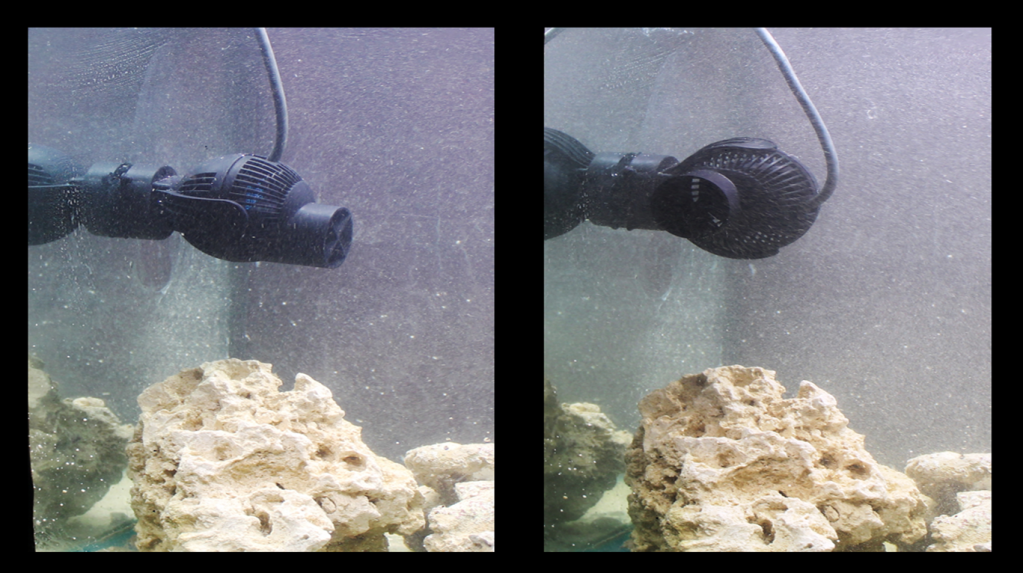
When it comes to using powerheads to create laminar and/or turbulent flow, I would strongly suggest using a minimum of 4 powerheads. This will give you better overall flow through your aquarium and help you to reduce the dead spots in your tank. Choose your powerheads based on: the amount of flow you will need, the angle you will need to place the power head at, and wither or not you are planning to use a controller. The below pics are two of the more common powerheads that used in the hobby. I placed these in my QT tank which is currently being used to cure some rock.
The best method that I have found to create good water movement is to use a wave box in combination with a controllable powerhead. I have tried to create a strong wave using two powerheads with a controller, but I was not satisfied with the strength of the wave. When using one powerhead in combination with a wave box and both controlled with the same controller, I noticed a great improvement in the strength of the wave through the whole tank. Both powerheads and the wave box were rated at the same gph. A strong wave of water movement in your tank is a great way to prevent detritus from settling in your deadspots.
My Two Examples
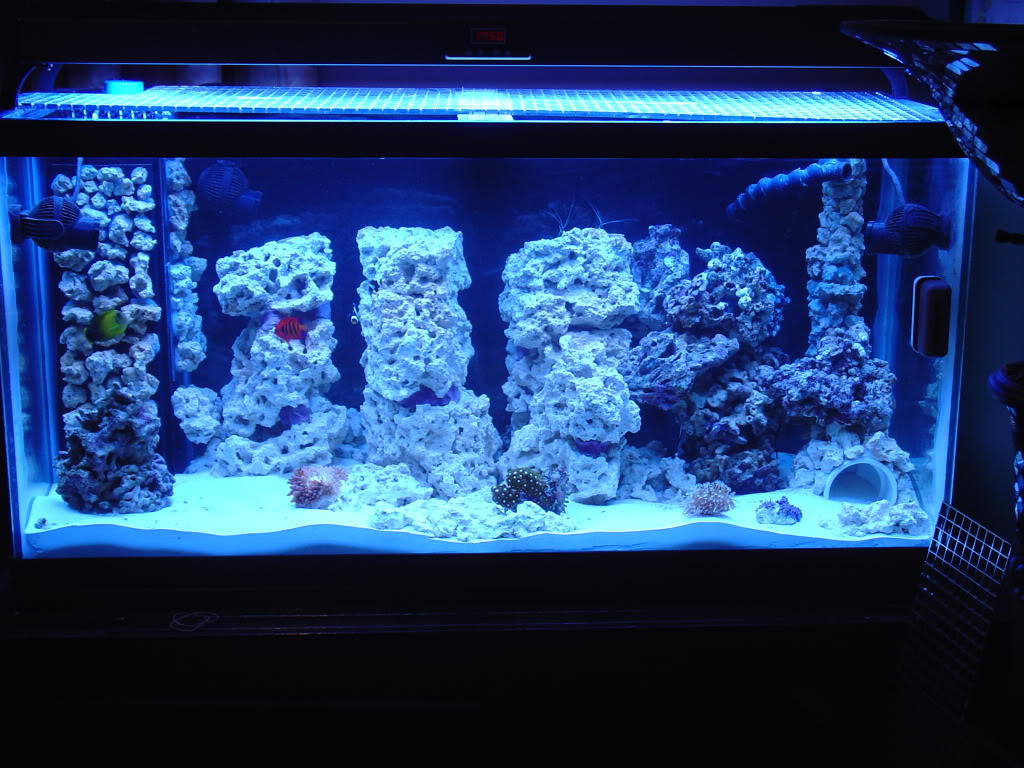
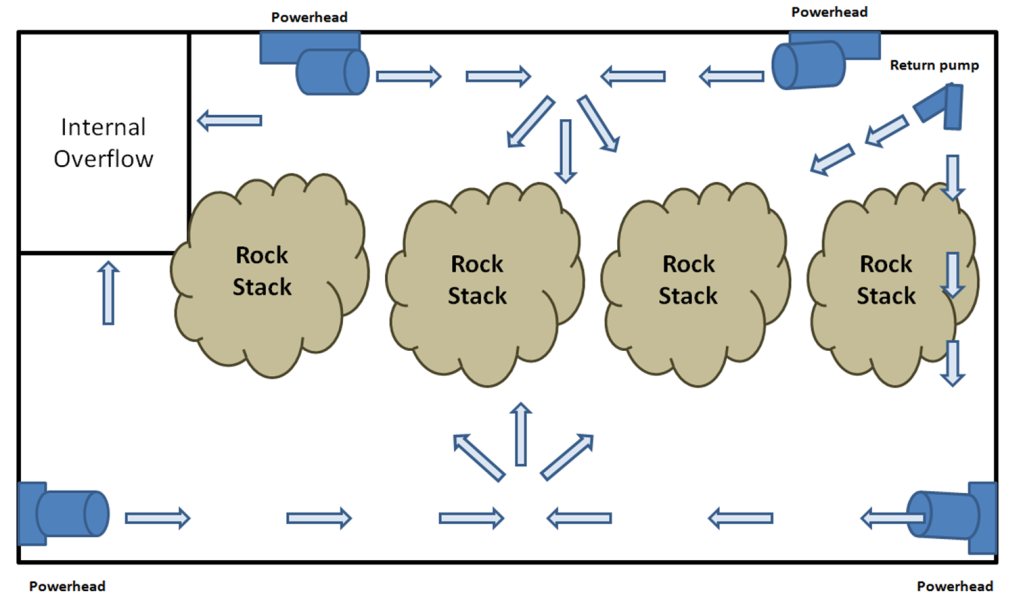
In my 90 gallon reef tank I knew I wanted SPS corals which require both high lighting levels and high flow. I also wanted to stack my live rock in taller columns rather than in any type of pile-like structure to maximize the biological filtration capacity of the rock. This will also help with SPS placement allowing me to put them higher in the tank were they will enjoy the higher lighting levels that they need. I placed four 1100 gph powerheads in the tank. Two are the front corners of the tank pointing towards each other and two at the back corners of the tank pointing to the same spot behind the rocks in the tank. Combined with the 1000 gph from the return pump, this created 5,400 gph of total flow (1100 x 4 + 1000) which puts the overall flow at 60X. The powerheads point at each other from opposite not only creates strong flow in the top half of the tank which is required for the SPS, but is also creates a very strong turbulent flow throughout the whole tank. As I wanted to keep at least one carpet anemone (which like lower flow) in this tank, I did not add a lot of water movement to the set-up. This left the lower have of the tank with moderate flows and random/turbulent flows .
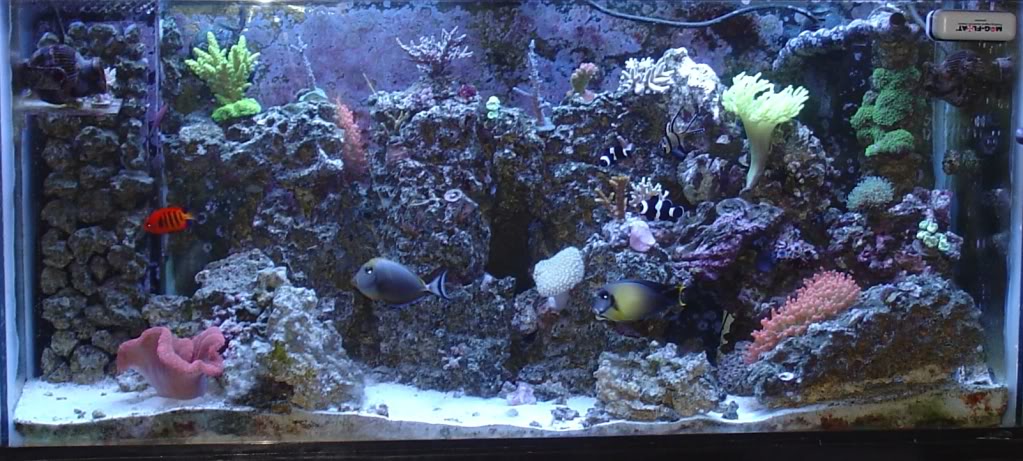
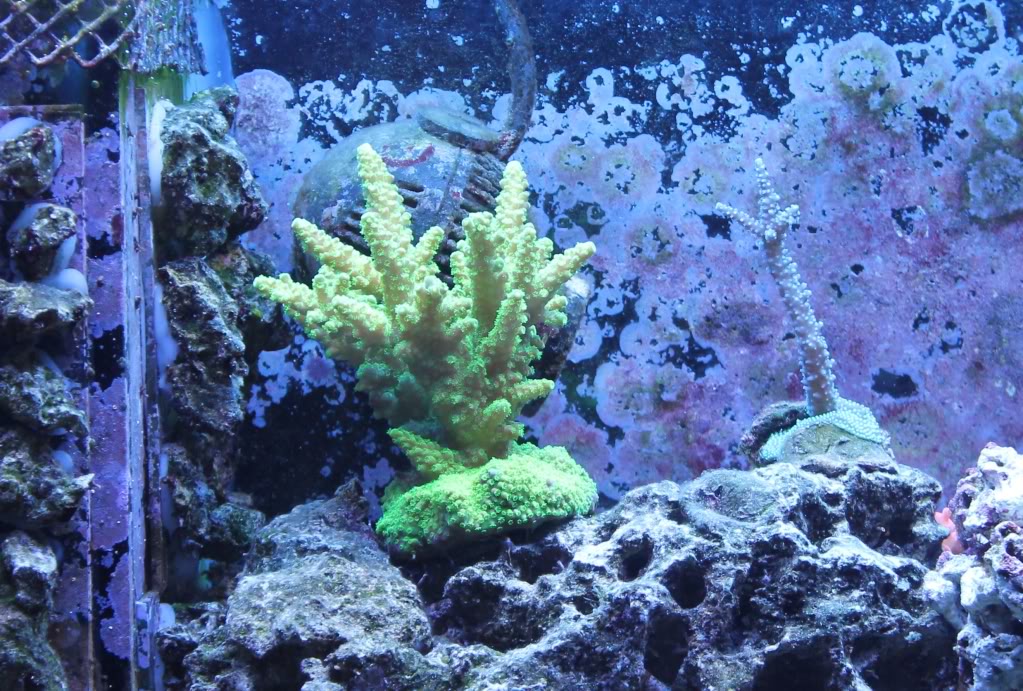
The below pic is a diagram I made to show the position of the powerheads so that it might give you a few ideas. It is showing how it would look if you were looking down into the tank from the top.
For my 120 gallon reef, I wanted mostly soft and LPS corals and lots of rock as well. For this tank I added four powerheads placed in the same way as I did in my 90 gallon using two 1100 gph powerheads at the front corners and two 750 gph powerheads at the back corners. When combined with my 1000 gph of flow from my return pump, that gave me 4700 gph of flow, or 39X flow.
In order to create an even more natural environment, I decided to add a wave box and a controllable powerhead with a combination controller. This allows both the wave box and the powerhead to come on in alternating cycles creating a strong wave effect in the tank.
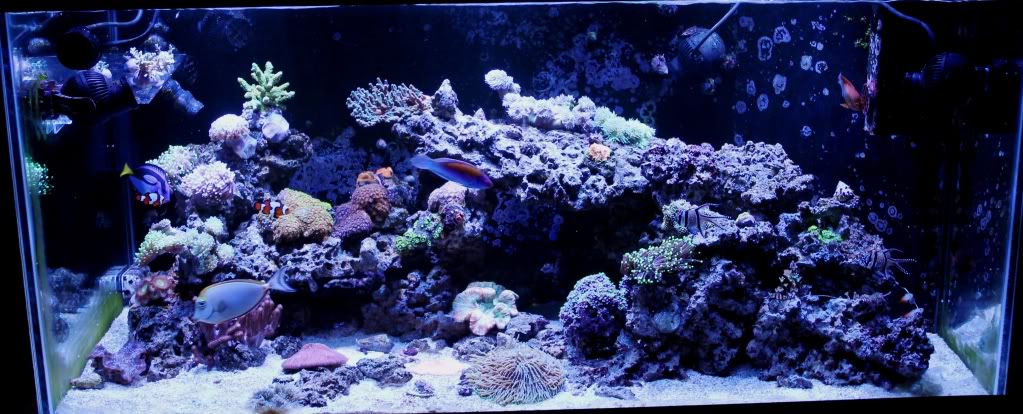
The below pic is a diagram I made to show the position of the powerheads so that it might give you a few ideas. It is showing how it would look if you were looking down into the tank from the top
If you have any questions about this article, please feel free to start a thread in our forum using the below link. If you are not already a member, please take the time to sign up and join.
http://www.aquaticcommunity.com/aquariumforum/newthread.php?do=newthread&f=62
References:
Advanced Beginnings: The Basics of Water Movement in the Reef Aquariums, by J. Warrick
http://www.advancedaquarist.com/2006/6/aafeature2
Can’t believe you have put it so well that even a newbie like me can understand it. many thanks
This was a great write-up. Thank you very much. I have a 150 gallon tall Reef Tank and am unsure of the placement/Lighting of my Corals. I would love to see a write-up from you about ID/Lighting/Placement. I am still trying to learn the names of everything but some of them include Frogspoon, Pumping Zenia, Mushrooms, Toadstool, Pipe Organ, Hammer, Hairy Mushroom, Starburst Polyp, Recordia, Several Colony Polyps.
I am always serching the web for proper placement so it would be nice to have a list of coral placement and lighting for people like me who are trying to put a face with a name. Thank you so much!
Robyn
Picayune MS
If you look through this site, we have already done some coral profiles that list: lighting, flow, and water parameter requirements for many of the more common corals in the hobby today. Take a quick look, you might find the info you are looking for is already here. There is a link below for you to follow. Once you know their requirements, you should be able to determine a spot in your set-up were each coral will do best.
https://www.reefaquarium.com/category/reef/corals/
Thank you very much for a detailed breakdown, some superb points of clarification. I would like to ask please…… my tank has two pump inlets both basically situated next to each other at one end of the tank, my weir inlet is at the other end of the tank, all are towards the top. Would you be able to advise the best way to place the inlet duck bills, I am led to beleive that aiming them towards the front glass is a good idea as it forces the flow to move around, but i am not sure if they should both go towards the front glass, any advice would be greatly appreciated. Thank you.
Exact positioning would all depend on what is in your tank as well. I would suggest to start by placing one pointed at the center of the front glass and the other pointed and the center of the back glass. start form there and adjust until there are no dead spots. You will likely need another powerhead or two, but it with the two outlets first to see how that works
Hi Cliff
Thank you for the reply, my only problem is that the two outlets with duck bills are at the back of the tank so turning one 180 degrees to face backwards towards the back of the tank would be very difficult. The tank itself has no separate sump, everything runs from sections at the back of the tank so there is no rear glass as such, just a plastic wall splitting the filter area ect from the main tank. I could put a power head at the bottom left of the tank that flows upwards along the back wall and try it from there. Many thanks for your reply.
Absolutely phenomenal write up! I too have a question…I have a 3x2x2 90 acrylic tank now (used to have multiple nanos). I have alot of SPS and some softies/LPS too. But soon, it will be an SPS dominant tank.
I have one MP10 on the right wall (centered) which produces 1800-2000 gph. And the return overflow of 400-500 gph.
I know I need to dramatically bump up the flow, but I am wondering what I could do…possibly a power head that produces 2000-2500 gph and call it a day? Or 2 duals that produce 1000 each…I dont like the look of TONS of powerheads everywhere.
Have you considered a wave maker with the MP10 ?
Beautiful tank! And thanks for all the info. What kind of lights are you using on your tank?
I was using AI SOLs when those pictures were taken.
I’m a very new beginner to the hobby, and have a 29g tank, 2 power heads, and a HOB 60g filter currently. I’ve placed the two powerheads in the front corners facing directly at each other , and they are periodically causing a sort of whirlpool effect in the center of the tank. Is this bad? Do you have any suggestions?
That is not all that bad of a situation. Random flow will sometimes do that. What is the GJP rate of the powerheads you are using? You can always try a few different placements in your tank with the powerheads on/near the sides of your tank point towards each other. There are many other factors that will com into play here such as the footprint of your tank and the GHP rating of your powerheads. However, I have found it best to keep trying a few slightly different placements until I find that “sweet spot” for the best flow.
Please i want to ask i am preparing saltwater tank i already put the ocean water and line sand and live rock and circulation pump what still i need and do i still need the filter or its enough the pump and what kind of chemical i need and how i use them
As long as you have enough love rock, that will be all the filtration you will need. Test your levels and watch them for a few days/weeks to make sure everything is ready. Then you can start to slowly add fish
Beautiful tank
Have a question,do you leave the tank light blue one on over night or shut all the lights off? Thanks
I turn off all lights at night for a 7 hour period. All forms of life need some down time
Fantastic read with descriptive diagrams and understandable language. Many thanks Cliff. Tons of help already employed.
Thanks
What kind of power head setup do you recommend for a corner bow front tank 100 gallons?
I would suggest to start with three powerheads around 700 to 1000 GPH. Change positions until to get a nice even flow around the entire tank. Add/remove flow based on the location and requirements of your corals
This is the most helpful Information I have ever read. Youhave covered it all! I think I am having a crash in my ten gallon and just relized it when someone pointed it out in reef2reef. I left a post saying that copepods were annoying my corals, and possibly eatting them. I guess I ownt tell the whole story because its long but started with low salinity at 1.08. Corrected that and corals started looking bad AFTER i corrected it so I thought it was the big copepods that are now crwling on them in my 10 gallon. Another long story. Wrong pods, fish was taken out from amonia. Neat thing I am having high amonia 0.25 and nirtrite 1.00 and nitrates around 20 to 40my nitrates are usally 5 maybe 10 before my weekly water change. I have no skimmer and small amount of water. Cant dose nopox or anything so I have to live with it until I gat my new 10 gallon with skimmer and they are out of stock everywhere due to corona I guess. So now what to do. I am using prime and adding daily mcrobe lift and one dose of dr tim. Just today did cap oiof prime. Should i change water daily? Big changes or small? Can I doe more prime or should I use something else. Coral are dying zoas not opening and some jsu looking real shrivled. Pleas help! My biggest and loved coral is a 9 head branching duncan. I sat in sand bed with no fragplug and it sunk down to far I guess but the bottom head has died and the skin on the branch is peeling upwards. Should I cut off that head? I really love that coral. My two head torch is my other fav. Not so bad just not extending and my coral that resemble a suncoral. iTs orange and dosnt come out much. It lost its bottom head. Can It still survive. I dont know if I can cut that? I was feeding them or trying but I iwll stop until amonia goes away. Will it have to go through a long cycle? Like from the start? It took 5 weeks to cycle? I too kout rock to clean it 3 times beacuse I was ftrying to get a finiky fish to eat and lots of food throw in.. It may have started all this or my salinity drop!