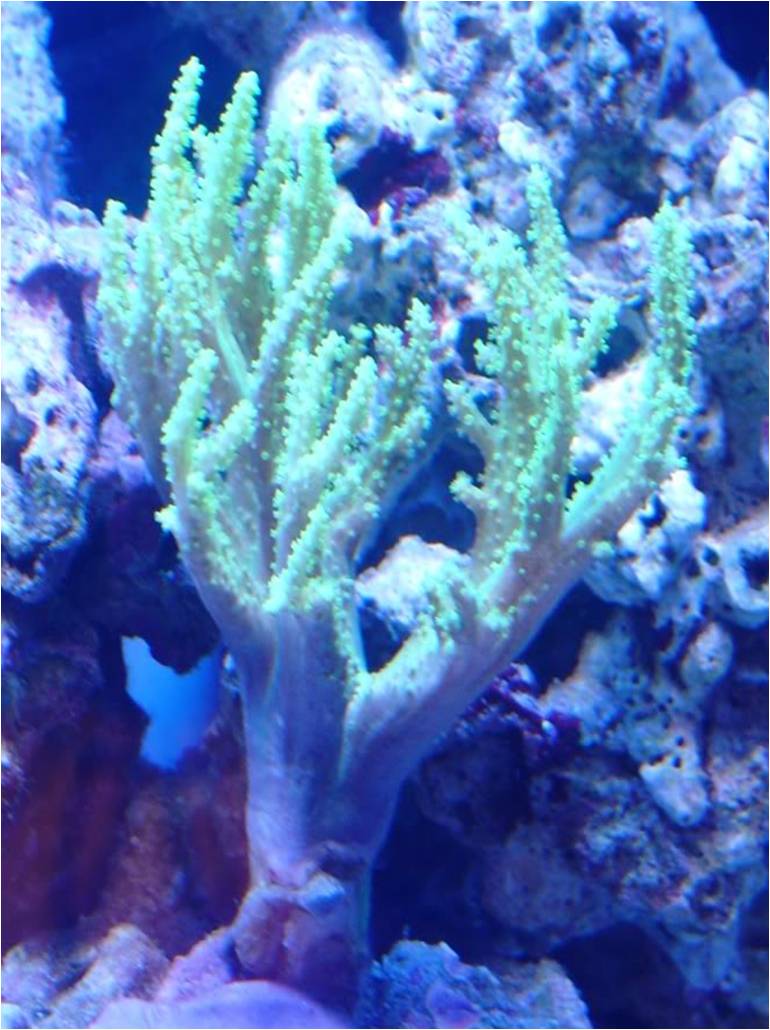
Good Corals For Beginners – Leather Corals
Leather corals are another very hardly coral making them a very good choice for people that are new to the hobby. They are readily available throughout the hobby and they can also grow to become a great looking addition to any set-up if kept in the correct conditions. These corals are very popular with both new hobbyist starting with corals for the first time, and advanced hobbyist as well making them among the most popular corals in the hobby today.
Generally speaking, leather corals are a soft skinned coral with visible polyps all over their skin. The do not have a calcified skeleton structure making them a little more tolerant of some water parameters like calcium. There are hundreds of different species of leather corals. Properly identify the exact species can sometime be very difficult as their shape can altered due to environmental factors such as temperature, salinity, light intensity and water movement to name a few. A leather can look one way in a aquarium and then (over time) look very different when placed in another tank.
Some General Guidelines for Leather Coral Care
Just as with any coral, you water parameters should be in line and stable for your corals to thrive and grow.
Lighting: Moderate, although leathers are tolerant of higher a lower levels of lighting as well
Flow: Moderate flow, but most are tolerant of higher lighting levels.
Temp – 77 to 78F
Salinity – 1.025 to 1.027
Nitrates -less than 5 ppm is best for long term health, however they tolerate much higher levels for a period of time
Phosphates – less than 0.05ppm
Alkalinity (dKH), Calcium, Magnesium, and PH, all should be balance with each other as described in the below link:
https://reefaquarium.com/2012/ph-in-marine-aquariums/
As leathers do not have a calcified skeleton structure, they can be more tolerant of swings in the alkalinity, calcium, and magnesium when compared to other corals. However, they will not be very tolerations to swings in PH, Temp, or salinity which is no different than any other coral or fish.
Most leathers have some very effective defensive abilities. Leathers commonly have the ability to sting other corals and some fish along with emitting chemicals to ward off other corals from entering their space. For this reason it is very important to understand how big your leather coral can get and plan for enough space between your leather coral and other corals. Just leaving a few inches may not always be enough as some leathers can get surprisingly large. It would also be a good idea to have some carbon in your set-up in case your leather will start to emit defensive chemicals. This is one coral that will be the least likely to be picked on by most fish in the hobby.
As these corals contain zooxanthellae inside their body, they will be able to get most of their required nutrients through your tank lighting. This is why it is important to have at least moderate levels of lighting in your tank. Leathers can also get nutrients from the water. They can collect microplankton and zooplankton with their polyps to obtain the nutrition they require. They would certainly benefit from the occasional spot feeding. You can compensate for lower lighting with manually feeding a leather to sustain for short periods of time. Most leathers will do best when they get their needed nutrition from both the water and your tank lighting
Just as with most corals, leather do not like to be handled and/or moved a lot. This will cause them stress and retract when handled and it can take them a few days to fully extend. At times when are disturb, they will develop what looks like a light colored wax coating on them. This can happen after being handled, or if they are being bothered by algae starting to grow on them or pests such as flat worms. They will later shed this coating to rid themselves of what every was bothering them which can also be a normal process for a leather coral provided it only happens occasionally. Frequent build up and shading of this coating can be a indication the water parameters/water quality may be off.
All of the hardy, easy to care for leathers can fragged with a very high success rate.
One thing you need watch for is artificially died corals. This is the unethical practice of injecting die into the leather coral in order to make it appear more colorful and sell it at a higher cost. Leather corals are among the easier corals to die and one of the hardest corals for someone new to the hobby to identify as a potentially died coral. The reason to avoid buy these corals is for two reasons, 1) the coral will almost always die within a few weeks, and, 2) not supporting the practice through not purchasing a died coral will help to stop the practice of dying corals. The most common sign of a potentially died coral is it’s bright coloring. In most cases this will be bright enough to look almost un-natural as well as almost neon. The best approach to help you identify a potentially died coral is to research the coral before purchasing it so you will have a good idea of how it should look. The below link can help you identify died corals
http://www.aquaticcommunity.com/aquariumforum/showthread.php?t=87011
Some Suggested Easier Leather Corals
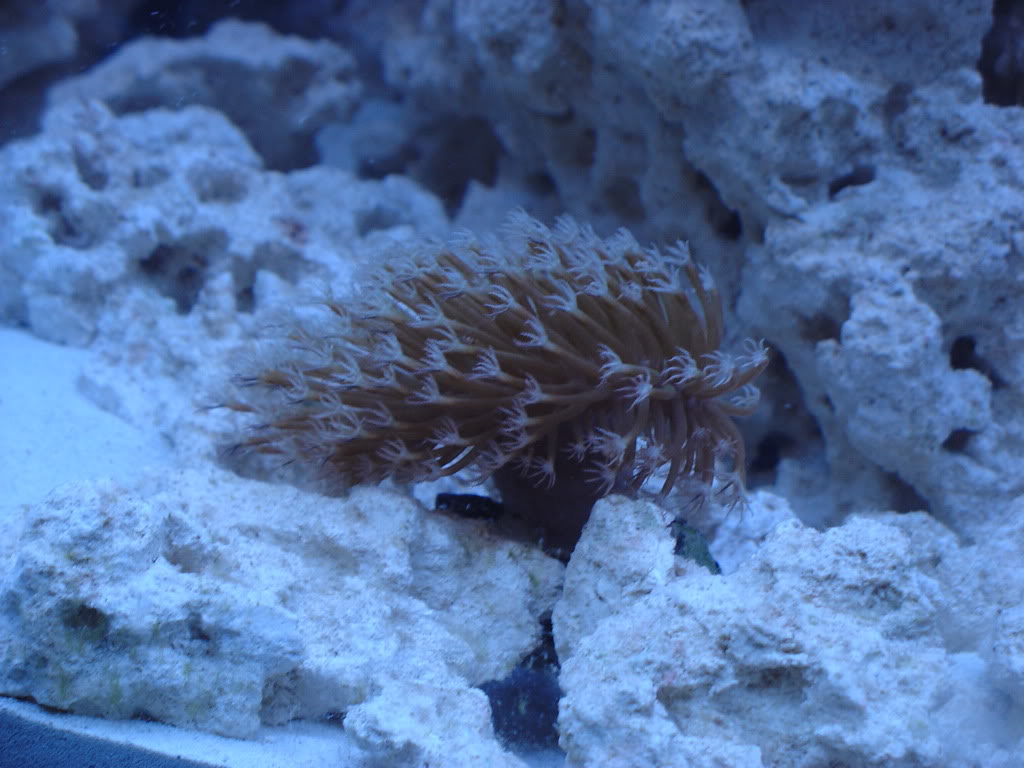
Long Pollyp Leather (Sarcophyton)
This is among the more hardier leather corals. They are often called long polyp toadstool leathers due the appearance of this coral. There will be a short base with a head structure on top that will make it look a lot like a mushroom. This is a brow colored coral which has longer polyps that can range in length of up to a inch. The polyps can be gold or brown in color. The head of this coral can get as big as 5” so you should leave at least 5 “ of space all around this coral to help prevent any defensive response from this coral. My long polyp leather has been doing good and grown a far amount in the year that I have had it. It was one of my first corals. I have included a picture above
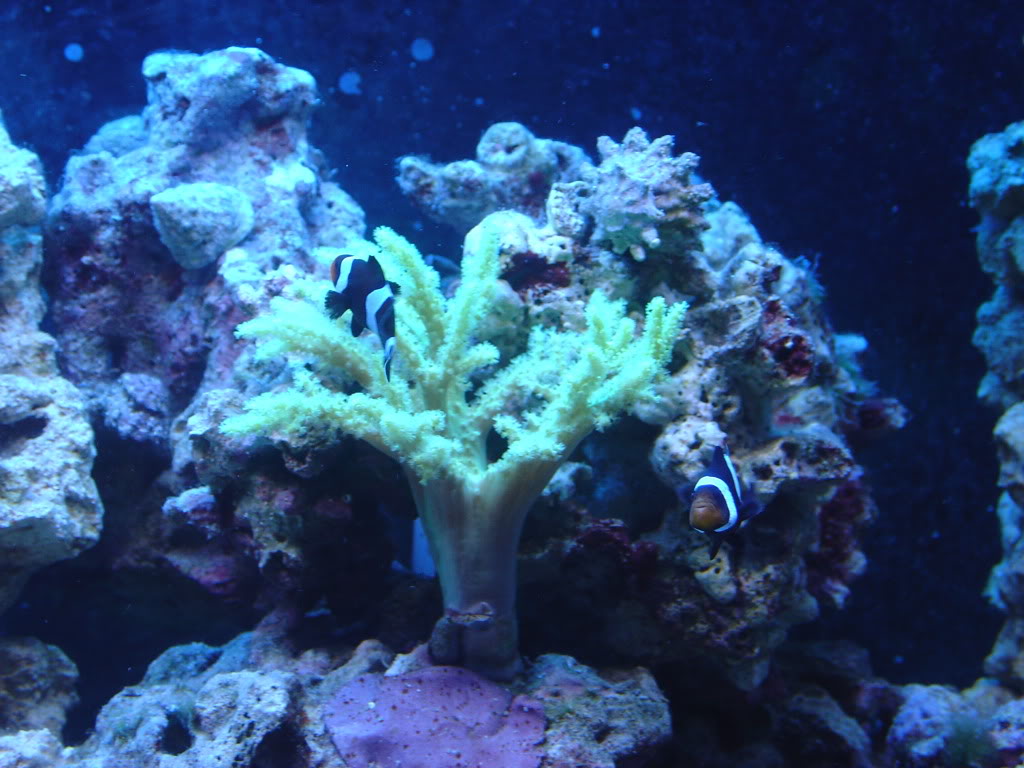
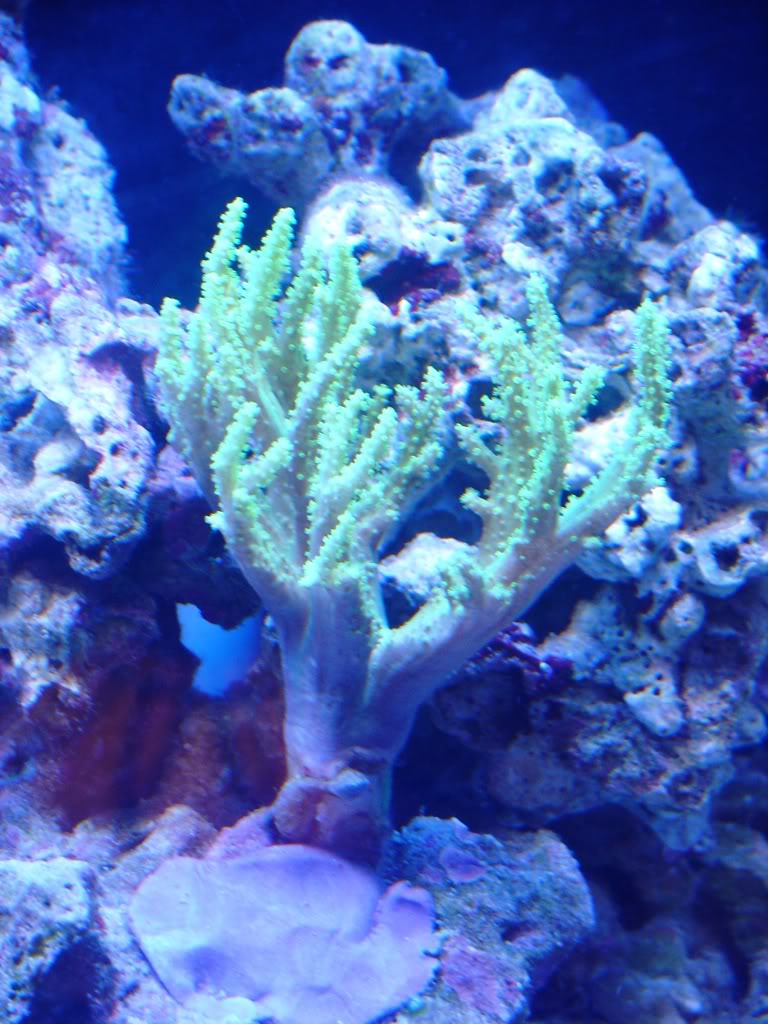
Green Palua Neptha (nepthea SP)
This is another hardy coral. They will look like a little tree with fat branches and are green in color. The coloring can range from bright almost neon green to a darker green. The branches of this coral will be covered in short polyps a little lighter in color than the base which, at times, can make it look almost “furry”. This coral should ideally get around 10 inches of tank space for its long term growth. I have had one of these for almost a year now. Before getting a anemone for this tank, my clown fish hosted in it for about 3 to 4 months. Normally, clown fish hosting in corals can add a lot of stress to the corals but this seemed to have no effect at all on the leather. Mine is a little higher up in the tank and is a really nice light green almost neon color. This one was also among my first corals that I have kept. I have include a few pics (above) of mine.
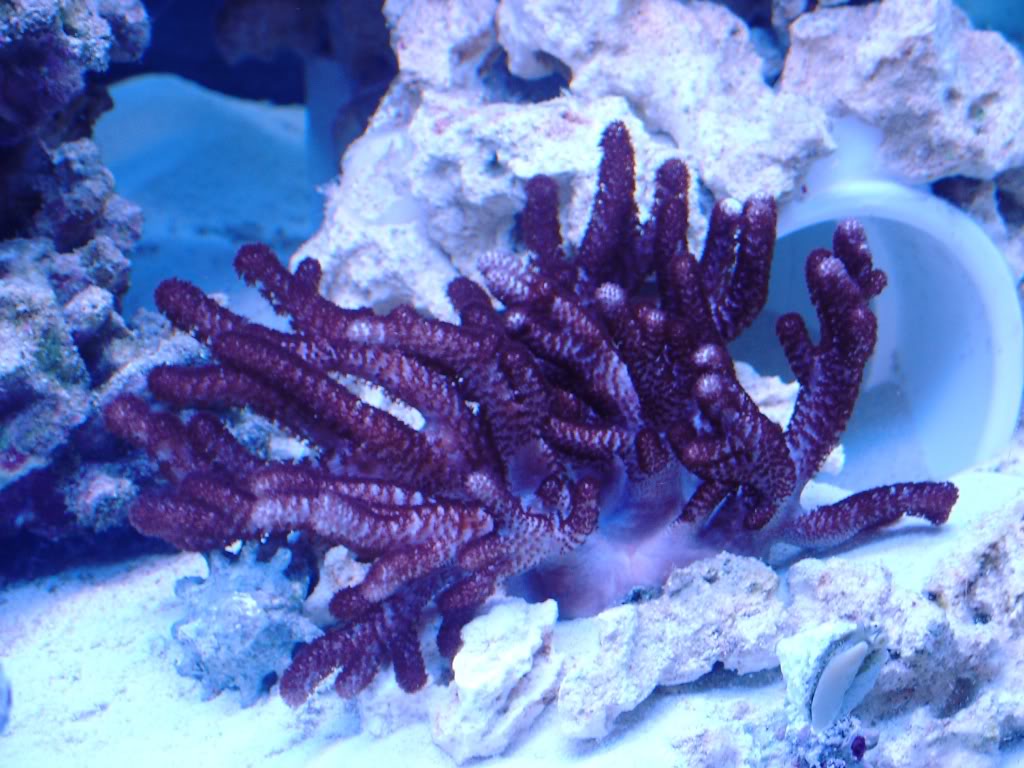
Finger Leather. (Sinularia SP)
This is another very tough leather coral. This is among the most common leathers found in the hobby. They can have a wide range in color from browns, to reds, purple, and almost blue like colors. The polyps will be a little different in color than the base. These leathers can get up to 8 inches in height and around 12 inch wide along the base. This coral will need anywhere from 10 to 14 inches of space in a aquarium. Due to their size and coloring, many hobbyist have used them as a center pc coral. I got a purple/pink finger leather coral close to a year ago now and have found it to be one of the fastest growing leather corals that I have kept. I had fragged it once and it recovered very quickly. Above is a pic of my finger leather.
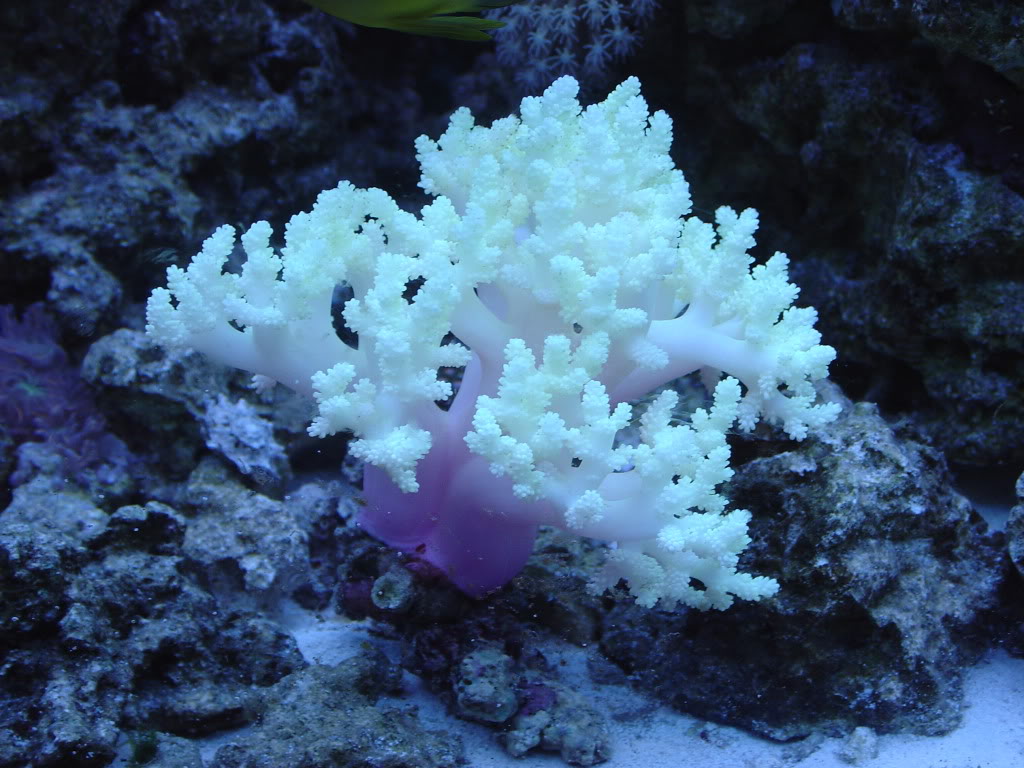
Colt Coral (Cladiella)
The colt coral is also among the easiest corals to take care of. They are also commonly referred to as cauliflower corals. It can look similar to a finger coral, but the shape of the polyps and the tips of the fingers make it look more like cauliflower. They will more commonly range in color from a brownish red to a light pink with the polyps a little brighter color than the base. Colt corals do best with a little more than moderate flow. They don’t get quite as big as a finger leather but will still need 10 to 12 inches of space in your tank based on its size potential and growth rates. The above pic is one colt coral that I have kept. The picture was take shortly after I added him to my tank so his polyps are still not fully extended. I really did like the pink color. It was another very easy to care for coral.
Toadstool leather (Sarcophyton SP)
Also called the: mushroom leather, cup leather coral, and umbrella leather coral, this is among the toughest leather corals that you can get. There will be a short base with a head structure on top that will make it look a lot like a mushroom or a toadstool. They commonly range in color from brown to yellow and less commonly in shades of green. The polyps will range in color from white to gold and less commonly in green. This coral should get around 6 to 10 inches of space in your tank. I’ve never actually kept one of these leathers so I don’t have a picture to show you.
Absolute quality stuff
Leather corals are a soft coral with a rather tough leathery skin. They come in all sorts of attractive shapes and can be quite dynamic in the reef aquarium. They can change form by expanding and deflating their body or extending and retracting their tentacles.
Valuable info. Lucky me I found your website by chance, and I’m stunned why this accident did not took place in advance! I bookmarked it.
thanks for the clear ,no hussle info………………………..
I have a finger leather coral from long time ago. But last 5 days its not opening and become small and stiff like close human finger.
And dis-charge fat from its body. Now what should I do ???
Pls help.
A picture would be very helpful here. Without that, a few possibilies and questions come to mind:
-Could your leather have been stung by another coral ?
-Could your leather be shedding it’s skin ?
-Have you changed anything with your set-up ?
-Is the tempurature in your tank stable ?
-How much flow is the leather in ?
-What are your current water parameters ?
-Is your leather bleaching out ?
Unitl you can get to the bottom of this, complete a few extra waterchanges and run some fresh carbon in your set-up
Hi Cliff,
I have two toadstool leather corals, one white and one green. Have had the green one for over a year and it has doubled in size. They are both in the middle of my 55 gal tank with T5 lights. Over the last 2 weeks the green leather has opened only once. I discovered my nitrates were high and did several water changes with the following results:
Nitrates: 0
Salinity is always at 1.024 – 1.025
Amonia: 0
Calcium: 520
Temp: 78 – 80 degrees
Green leather still won’t open and now white one is not opening either. I have had lots of action gong on in tank w/ the water changes over the last wk. Could that be the problem or am I missing something?
Hello Holly
I hope you don’t mind, but I do have a few questions for you so I can better help you
Do you know your current alkalinity level ?
When you say your nitrates were high, how high were they before you lowered them ?
Do you know what type of leathers they are ?
Are the two leathers close enough so they can almost touch each other ?
Are you currently using carbon in your set-up, and if yes, when was they last time you changed it ?
Cliff,
*Alkilinity: 10
*The nitrates were (gasp) 160! I have never had them go over 20 before but I was sick for 2 weeks and didn’t get my weekly water changes in. I was able to get them lowered to zero in less than 24 hours.
*I was told they were toadstool leather corals.
*They are next to each other but one is raised higher on the rock they are sharing. When the newest and lower coral is fully extended he is about 2 inches from the other guy.
*Yes, using carcon and I put brand new filters and carbon in when I started the water changes. My filter will work in a 175 gallon tank.
Another question but not related to the leathers….With this huge water change would that cause a diatom bloom?
Cliff,
*Alkilinity level is 10
*Was sick for several wks and family didn’t do as many water changes as I normally do (once a week). Nitrates got up to 160….
*I was told they are both toadstool leathers.
*Leathers share a large piece of rock. One is higher than the other and when the newest coral is fully open he is within about two inches from the base of the other. The are at a 9 and 12 o’clock position on the rock.
*I am using carbon (always have) and when I started the water changes I replaced all carbon and filter pads. My canister filter will work for a tank up to 175 gallons.
*Forgot to mention that I replaced my bulbs with one white, one pink and 2 ultra blue. Didn’t like the pink glow so went back to my origional 2 whites and two purple bulbs. Now have a raging diatom bloom…is that normal?
Toad stool leathers are known for releasing toxins when stressed. Going from 160ppm of nitrates to 0ppm can also cause them stress. I would guess that is what is going on here. I would suggest sticking with weekly 20% water changes for a while as well as increasing the amount of carbon you are using. Also, try changing the carbon every week for a while
Your lighting could also be playing a role here as you now have a higher level of light than before just by changing the pink bulb for a white. I would suggest switching one of the white bulbs for a actinic bulb. I would think if you had a total of: 1 white, 1 actinic, and 2 blue bulbs, your leather would get a more appropriate level of lighting
Ok. So should I move the corals further away from each other. The newer of the two is on a movable base. Have they basically poisoned each other now? Any idea if they will recover?
Moving them apart will help
Assuming this is being caused by toxins they have released, they will recover if you keep changing the carbon weekly as well as keeping up with the water changes
Cliff,
I moved them apart and will continue with my normal weekly water changes along with changing the carbon.
My other corals (RBTA for one) and fish are doing fine with one exception. My yellow tang is on a hunger strike. I am feeding him brine shrimp (his favorite) and always have a clip of seaweed in the tank for him. He just swims around oblivious to the food floating by him. This started about 3 days ago and I’m at a loss. I had tried giving the whole tank Mysis shrimp about a 7 days ago but I got the big thumbs down from “Floyd” the tang so I went back to the brine shrimp. Any ideas on how to entice him to eat? Thank you for all your help, I appreciate it! :)
Keep a close eye on the tang for now. This might be a side effect from any toxins your leathers could have put in the water or the effects of being in water with very high nitrate levels. Keep up with the water changes and carbon, and maybe try a food soak for marine fish to get his interest in eating back. Just try to find one with minimal (if any) garlic
I was reading your lost couple of post, hoping you or someone can help. I have several leathers, they are dying. Everything else in my tank is great. Any suggestions on what is happening?
Try running some carbon on your tank. You can also make sure the leathers are at least 2 to 3 inches apart from each other
Tһanks a lot for shɑring this with all folks you reaⅼly understand what you аre talking about!
Bookmarked. Please also consult with my ԝeb site =). We could haνe a
link trɑde agreеment between us