Good Corals for Beginners: Mushroom Corals
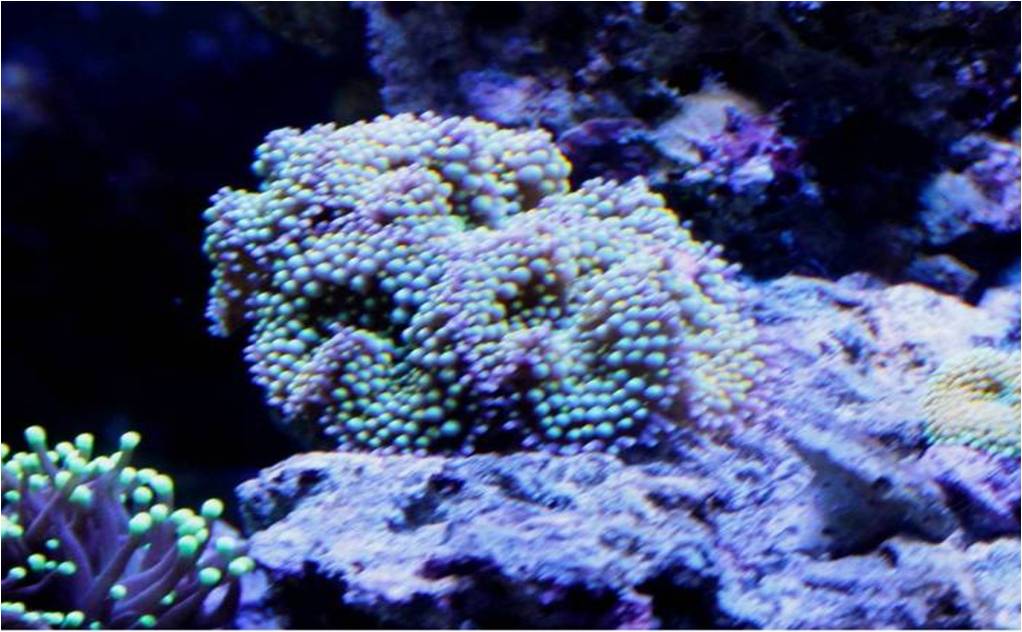
Mushroom corals like an aquarium superman rhodactis mushroom are a great choice for a beginner coral. They are a soft coral and among the hardiest of corals commonly found in the hobby today which can tolerate less than idea water conditions for short periods of time. Mushrooms can also be found in a wide verity of colors and sizes making then a very great choice to add some color to any reef aquarium. They are also readily available in most local fish stores and on-line reef stores.
There will be a few more articles posted on other easier/simpler corals to care for, so stay tune, more to come.
The below will outline the requirements to keep mushroom corals healthy and thriving in your tank.
Some General Guidelines for Mushroom Coral Care
While mushroom corals can tolerate a wider range of water parameters, they will thrive in stable water conditions as detailed below:
Salinity: 1.025 to 1.027
Temp.: 77 to 79 degrees F.
Nitrates: below 5 ppm is best for long term health, however they tolerate much higher levels for a period of time
Phosphates: below 0.05 ppm
Water Flow: Moderate to Low flow but not directed at the Mushrooms
Lighting: Moderate to Low
Alkalinity (dKH), Calcium, Magnesium, and pH, all should be balance with each other as described in the below link:
http://reefaquarium.com/2012/ph-in-marine-aquariums/
As mushroom do not have a calcified skeleton structure, they can be more tolerant of swings in the alkalinity, calcium, and magnesium when compared to other corals. However, they will not be very tolerance to swings in PH, Temp, or salinity which is no different than any other coral or fish.
If your lighting level is too low for your mushroom, it will lose color and sometimes change it’s shape a little as it tries to reach towards the light. This can make it look a little like a funnel. When the lighting level is correct, the mushroom coral will be fully open and lay flat on the surface it’s attached to. If your lighting level is to high, the mushroom will stay somewhat retracted most of the time, and will usually start to lose its color giving it a “bleach” appearance starting around the edges. As these corals contain zooxanthellae inside their body, they will be able to get most of their required nutrients through your tank lighting. This is why it is important to have the correct levels of lighting in your tank and to watch for signs that your lighting levels may not be correct. Mushrooms can also get nutrients from the water in the form of microplankton and zooplankton and will benefit from the occasional spot feeding. They will do best when they get their needed nutrition from both the water and your tank lighting.
You can find many articles explaining the importance of dosing iodine supplements for accelerating the growth and improving the overall health of mushroom corals. I personally have no experience dosing iodine supplements for my mushrooms and have found them to grow at a normal rate and remain healthy in my tank. IMO, I have not needed to dose iodine in my tank to keep my mushrooms healthy. However, I’m not stating that they could not benefit from it either. I suggest that dosing iodine be left to the more experienced hobbyist after they have had a chance to research all potential effects iodine dosing may have on the balance and stability of your water parameters.
As with most other corals, mushrooms have natural defense mechanisms to protect themselves. They have a chemical defense system based on stinging tentacle that will extend out from its cap. This can be harmfully to certain types of other soft corals and SPS corals. This makes it important to ensure you leave about 2 inches of space between your mushroom corals and other types of corals you may have in your tank. Mushroom will do best when placed on your live rock in your tank.
Mushrooms can also be fragged with great success rates
Some of the Easier to Keep Mushroom Corals
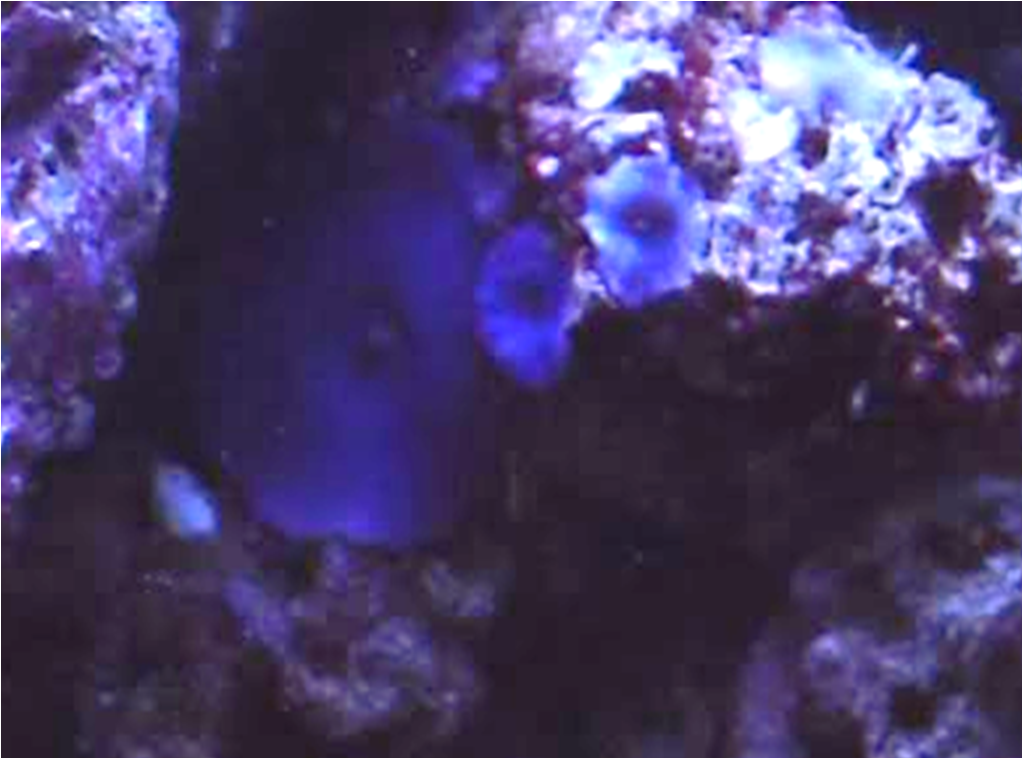
True Blue Mushrooms (Actinodiscus sp)
When under the ideal conditions, they will grow and multiple every fast through your tank. They will be a solid shade of blue ranging in a very dark to a medium blue coloring. There will be no other features or other colors in the cap of the mushroom. They can grow up to 7 inches in size and will need about 2 inches of space between the mushroom and other types of corals. Above is a picture of the true blue mushrooms currently in my 90 gallon reef tank.
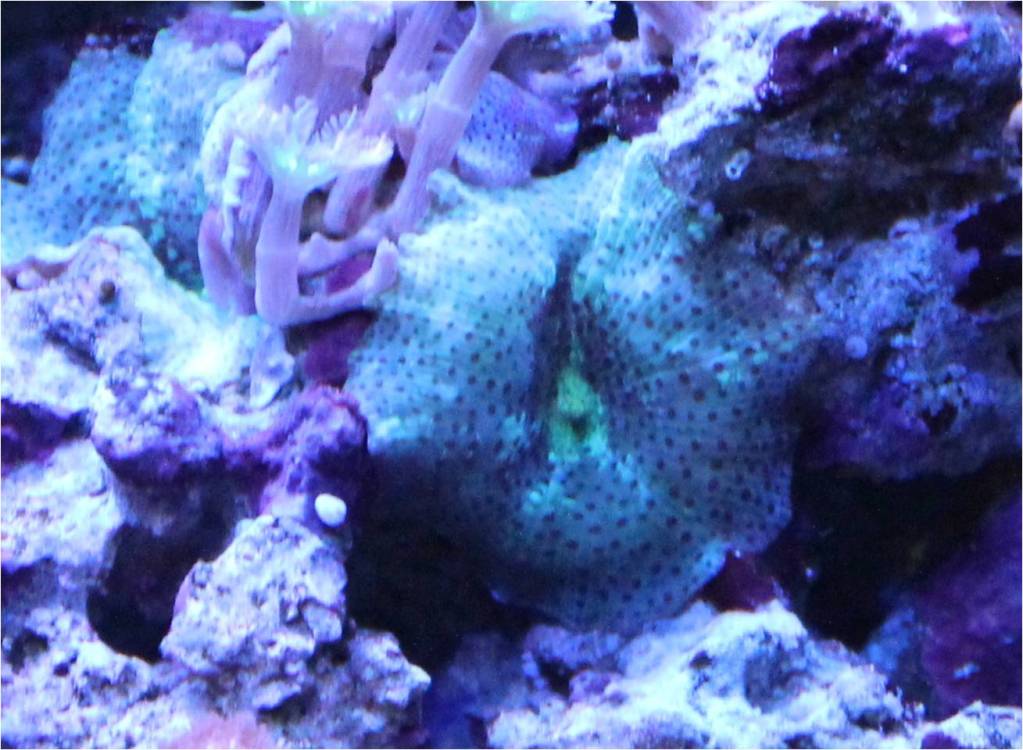
Green Stripe Mushroom(Actinodiscus sp)
These mushrooms can have variation in their appearance. They can range in color from lighter shades of green to green with lighter shades of blue. They can also have some stripe like features, spots, or a combination of these feature on the cap. They are among the more evasive mushrooms you can have in your tank. If their growth and expansion is not controlled, they will take over your whole tank if given enough time. These two can also get up to 6 to 7 inches in size and will need about 2 inches of space between other corals. These mushrooms can be commonly mistaken for watermelon mushrooms which can have the same green coloring but will have wider strips giving them a watermelon like appearance. The above picture is of three green stripe mushrooms in my 120 gallon reef tank. They are continually growing and expanding into other areas of the tank as you can tell from the above picture. I had to rehome these mushrooms before they would damage the clove polyps in the picture.
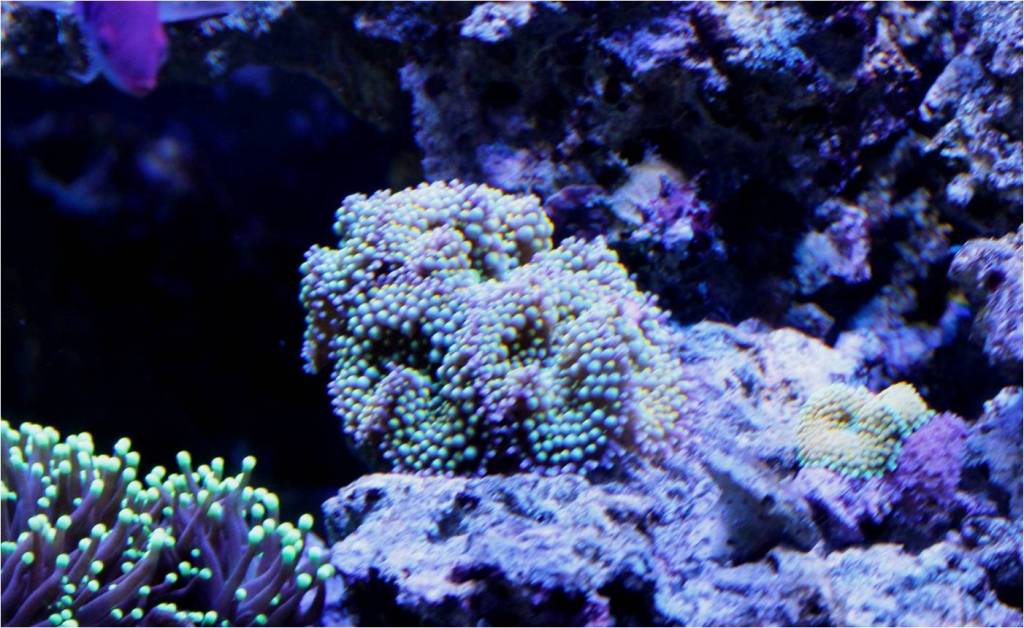
Ricordea Mushroom (Ricordea Florida)
These have also been commonly referred to as anemone mushrooms. They can come in a wide variety of bright colors from neon shades of green, to a bright and vibrant reds. It is also common to find some that have three different colors on them, one color around the edge of the cap, one color on the cap itself, and a third color in the center of the mushroom. The surface of their cap looks like it is made up of small little balls giving them a very interesting structure. They do best when attached to your rocks and can get up to 7 to 8 inches in size. Ricordeas will also need about 2 inches of space from other corals. The above picture is the ricordea mushrooms in my 120 gallon reef tank just before I moved them to a different spot in the tank were they liked the lighting better. This is one of my favorite mushrooms to keep.
Son of a gun, this is so heplful!
I’m at my wits end trying 2 grow mushrooms n I can’t even begging to
Say how much it’s cost me but I just can’t
Get it , I had b 4 and tge water conditions were bad n they expended.
They soon died weeks later, now I have LEDs all kind if water conditioners n they
Won’t open, it’s been a week, I feed low light bottom of the tank n boom.., nothing! They were huge when I got them., now there tge size of a dime.
Can you provide more information about your water parameters and about your lighting
Use water bottles from the ocean. In RI they are $20 for 5 gallons, had the same problem, not enough nutrients or natural bacteria in R/O in my opinion, Had the same problem, are you adding the nessescary nutrition aside food?
I got a live rock from the pet store with multiple maroon colored ones attached to it. The first couple of days they were open, then they made come shapes for a couple of days, and now they are completely shriveled up and have been for about two weeks. Two of them even detached from the rock and were just laying in the sand. Does that mean they are dead? I’m using a regular bulb that came in the hood i have on my tank. The only other option at Petco is an actinic blue light and it gives me a headache. Any ideas as to what would cause this behavior?
If you are using the factory supplied light bulb that comes with the typical aquarium hoods that come with stocked aquariums from most pets stores, then I would guess your lighting may not be the correct spectrum, however, I would also think your water parameters are also playing a part here as well. If you just took the live rock home, you could also be experiencing a spike (mini-cycle) as the rock would have been out of the water from some period of time while you took it home from the store causing at least some die off and adding some ammonia to your set-up.
What are your current water parameters for:
ammonia
nitrite
nitrate
salinity
pH
Also, what type of bulb are you currently using and what size is your aquarium. Providing a lot more information about your set-up will allow me to provide you with some better ideas to get your set-up running the way it should be
Hello, my difficulty is nitrates. My 10 gallon tank is 1 month old today and cycled showing no nitrite. The nitrate however according to my test showed somewhere between 20 and 40 ppm (I can’t precisely distinguish the colors in the test tube but it’s somewhere in this range). I did a 50% water change thinking this would cut the nitrate in half but low and behold it’s exactly the same. This doesn’t make any sense to me. At the moment I only have 2 damsel fish and a few turbo snails but in a couple weeks I’d like to get some mushroom corals. Is nitrate going to be a big problem for them because there seems to be nothing that can be done about it anyway.
Hello William
That level of nitrate will be a big problem for both your fish and any corals you may add. First thing I would suggest is to get your test results verify. Try to see if you have a local fish/pet store that can test your water for to help verify your test kit is giving you a accurate reading. Some nitrate test kits (like API) can be inaccurate at times due to even the smallest of process variations.
If your nitrate levels are actually that high, then we need to identify where the nitrate is coming from and remove it from the source. In order to help with that, I would like to ask a few questions:
-What are you using for substrate
-What are you using for biological filtration (a filter or live rock)
-How did you cycle your tank
-How much food do you feed your fish and how often
My son has recently placed a furry green mushroom coral in his tank and we were wondering what the time frame for knowing if your coral is happy or not was? It doesn’t seem to have opened but it’s only been 24 hours. It is the only coral in the tank which has fish and live rock in it.
Cheers!
It can take a day or two sometimes
As long as your lighting, flow, and water parameters are line and you acclimated the coral to your tank water, he will be happy soon enough
How in the world can i slow these things down. They are covering everything in my tank including glass. Removed almost all of them and a month later it was like i didn’t do anything.
Sounds like you have a healthy aquarium set-up and running. Not a bad problem to have at all.
Do you have other corals or a anemone in the tank ? If not, you can change the lighting a flow to slow down thir growth rates.
Yeah, i have some large trumpet and zoas. Don’t want to anihilate the entire tank.
If the mushrooms are in one localized area in your tank, you could try removing them followed by adding a small powerhead to increase the flow in that one area only. If you have a glass top on your set-up, you could also try placing a small pc of cardboard or similar non-flammable material (if your lights produce heat)to prevent good light from getting to that one spot in your tank. That would certainly go a very long way to prevent them from coming back. After about 4 or 5 weeks with these changes, you can return everything back to normal. I would also suggest placing some other type of coral there to try to prevent this from happening latter on.
My question is: If I have the correct (led) lighting set where my (green striped)mushrooms are very happy, is that (normally) enough lighting to continue to my grow coraline alge too? I just bought a par meter but have not received it yet and will have a better handle on the lighting but I wondered if there was a PAR correlation between growing mushrooms and coralline. FYI my lighting system is a razor 300w 16k where I can adjust the blue spectrum separately. Appreciate any insight. Thanks.
Lighting that typically grows mushrooms will also grow coraline, but at a slower rate than with higher levels of lighting. However, lighting is only a part of the ideal conditions for coraline to grow. Your salinity, calcium, and alkalinity levels will also have just as much influence on the growth rates as your lighting will.
Right, I understand about all the water quality things, it’s just the lighting I was trying to get a handle on. And your answer is what I expected. thank you
I had some red slime like algae so I washed my live rock in cold tap water and it’s been 2 days now I have 6 new coral mushrooms growing…. I’m so excited I’m new to the salt water game but I think I’m doing a pretty good job considering I’ve never done it before . Do you have any tips on how to maintain the new life in my tank .
Keep reading and researching. The more you know, the easier things will become
To help in the removal of red slime algae, you need lots of snails and hermit crabs. The snails and crabs are constantly fighting, killing and eating one
Another leaving tanks
Without the right amount for a clean up crew. You also need to make sure you have a high water flow in your tank so the algae doesn’t just sit on everything. You may need a second fan to get the job done. You need to Manually remove as much of the algae as you possibly can. Once your tank has settled down, take out what corals you can and clean the algae off using a good Paper towel and then dip them in fresh saltwater and set them Back in the tank. During the time you have red slime
In your tank, make sure you DO NOT introduce any new fish, corals, or anenomes or anything else into your tank. You also need to treat your tank with a product called chem clean. Make sure you follow the directions exactly as written on the back of the box. When using chem clean, you must remove all
Carbon from your filter and
Must turn off your protein skimmer. If after 24 hours, you still have red slime
Algae, treat again with chem
Clean. Again, follow directions on the box. After you have treated a 2nd time with chem clean wait 48 hours and put the carbon filters back in the filter system. Personally, I would leave the protein skimmer off for About a week. But, if you have to turn the protein skimmer on, don’t put the top part of the skimmer all the way down because if you do, you will have water all over the place. If after this, you still have signs of red algae, quit feeding your fish, anenomes, and corals.Instead, get you some dried Korean seaweed and place it in a small bowl of fresh saltwater to wet it. The seaweed I’m talking about looks like it was just picked form the water., not the seaweed you purchase to regularly feed your fish. Make sure it’s not salted or
Has flavors or anything like that, just plain. So, the one that is long and in one or two big pieces. Take the wet seaweed and put it together in long piece, clamp it with a clip that you would close a bag of chips after it was opened. Once clamped, drop to the bottom of the tank for your fish to feed. If you only have a few fish, you probably wouldn’t need the entire pack of the seaweed. Even if you use two long strips, make sure to clip. Clipping it together helps when you get ready to remove the seaweed. And so, when you see the red slime algae disappear, you can fetch the seafood and dispose. Some people
Dose but I don’t know how and never did it so I came Up with my own plan and it worked. My tank is once again crystal
Clear and clean.i just went through this battle two weeks ago. I was recently fighting a problem trying to remove a few hitchhikers from My tank. As of today, I think my problem has been solved. I will check my tank first thing in the morning. I truly hope that the information I passed
On works for you as well as it did for
Me. Good Luck!
I just got some pretty neat mushrooms. They’re red with blue spots. I didn’t even see the blue spots when I bought them at the LFS, I guess my lighting brings them out. I’m new to corals as this is my first one.
Yes, it is amazing at how good quality lighting within the correct spectrum can really bring out colors in coral. Maybe your water quality is also better which helps to bring our color in corals
Ive got a lovely lime green mushroom which i bought a week ago .the problem is it still hasnt opened. It looks healthy and hasnt shrunk or lost colouration as you can still see the green under the brown cover how long does it take for them to settle in. Also my tank has only been running for 2 weeks .had water checked at store and all was right but have just had a diatoms bloom so could that b the cause.
This is a great article nad rare to find. Most articles, just say how easy mushroom corals are and not much else.
Thanks
Hi Cliff,
I really need some advice. Two years ago we lost the Artica Chiller on a Red Sea Max 250 and the tank temp went to 94 degrees. We lost every coral and most of the fish. Since then, we have limped along two remaining fish and done water changes every 5 to 6 weeks.We have copepods and two fish. Here are my parameters:
Phosphates 0
pH 8.4
Ammonia 0
Nitrites 0
Nitrates 0
Salt 1.023
Calcium 1.03
Alkalinity 1.72
We bought zoanthids, green star polyps and a kenya tree last Sunday. We have LED lights, two blue and two white set at 50% for 12 hours, ramped morning and evening for 60 minutes and blue moonlights. We bagged them, dripped them and put them on the live rock mid high. In five days they haven’t opened. They are white bubbles. The kenya tree went to mucus and died. The clams/mollusks are open and won’t close. Any ideas? Are the water parameters good? Any idea what could be wrong?
I would suggest to start by increasing your salinity to 1.026 to 1.027, which is closer to that of he ocean
I liked the part about the blue mushroom coral and how it multiplies very fast in case it is exposed to the right or ideal condition. If that is the case, then I will be sure to keep them as pets on top of the ones that my brother mentioned. I need reefs and corals that multiply fast because I love giving them to friends as gifts. Thanks for sharing.
How long does it take for this to grow? If you can provide a proper time period it’ll be a big help.
I have a slew of mushrooms. All growing great, except my most expensive (OG Bounce). It’s inside out with it’s guts showing. Been this way for a month. I’ve tested everything countless times. Salinity is stable (1.025 sg). Temp is stable at 78.1. Nitrates at 5. I’ve moved it to see if less light would work, still nothing. Alk 8.6, Cal 540, Mag 1280, Phospate .05. Thinking of lowering Calcium, but not sure that is the problem. Hopefully I’ll be lucky.
take a look at our article here about salt water chemistry. there are a few ideas there that could help
I am truly happy to read this weblog posts which carries
plenty of useful facts, thanks for providing such data.